Posts tagged ‘Shell’

Comment Compresser ou Décompresser des données en tar.gz sous Linux

Tutoriels

05/04/2013

Tags: linux, Shell

Comment Compresser ou Décompresser des données en tar.gz sous Linux kb  Shell linux

Les fichiers au formats .tar.gz sont des données archivées avec l’outil TAR puis compressées avec l’outil GZIP. Ce format est souvent rencontré dans la distribution de sources d’installation pour les environnements Linux.

lire la suite…

Vous avez aimé cet article ? N'hésitez pas à le partager avec vos amis en cliquant sur les boutons ci-dessous :

  • Comment Compresser ou Décompresser des données en tar.gz sous Linux kb  Shell linux
  • Comment Compresser ou Décompresser des données en tar.gz sous Linux kb  Shell linux
  • Comment Compresser ou Décompresser des données en tar.gz sous Linux kb  Shell linux
  • Comment Compresser ou Décompresser des données en tar.gz sous Linux kb  Shell linux
  • Comment Compresser ou Décompresser des données en tar.gz sous Linux kb  Shell linux
  • Comment Compresser ou Décompresser des données en tar.gz sous Linux kb  Shell linux
  • Comment Compresser ou Décompresser des données en tar.gz sous Linux kb  Shell linux
  • Comment Compresser ou Décompresser des données en tar.gz sous Linux kb  Shell linux
  • Comment Compresser ou Décompresser des données en tar.gz sous Linux kb  Shell linux
  • Comment Compresser ou Décompresser des données en tar.gz sous Linux kb  Shell linux
  • Comment Compresser ou Décompresser des données en tar.gz sous Linux kb  Shell linux

Windows Server 2012 : Comment défragmenter un lecteur en Powershell

Windows Server 2012 : Comment défragmenter un lecteur en Powershell kb  Windows Server 2012 Windows 8 Shell Scripting powershell

Distribué sur Windows 8 et Windows Server 2012, Powershell v3 offre de nouvelles fonctionnalités comme la gestion des opérations de défragmentation des lecteurs logiques. Cette fonctionnalité est assurée par la cmdlet Optimize-Volume. Voyons comment ça marche dans ce petit tutoriel !

lire la suite…

Vous avez aimé cet article ? N'hésitez pas à le partager avec vos amis en cliquant sur les boutons ci-dessous :

  • Windows Server 2012 : Comment défragmenter un lecteur en Powershell kb  Windows Server 2012 Windows 8 Shell Scripting powershell
  • Windows Server 2012 : Comment défragmenter un lecteur en Powershell kb  Windows Server 2012 Windows 8 Shell Scripting powershell
  • Windows Server 2012 : Comment défragmenter un lecteur en Powershell kb  Windows Server 2012 Windows 8 Shell Scripting powershell
  • Windows Server 2012 : Comment défragmenter un lecteur en Powershell kb  Windows Server 2012 Windows 8 Shell Scripting powershell
  • Windows Server 2012 : Comment défragmenter un lecteur en Powershell kb  Windows Server 2012 Windows 8 Shell Scripting powershell
  • Windows Server 2012 : Comment défragmenter un lecteur en Powershell kb  Windows Server 2012 Windows 8 Shell Scripting powershell
  • Windows Server 2012 : Comment défragmenter un lecteur en Powershell kb  Windows Server 2012 Windows 8 Shell Scripting powershell
  • Windows Server 2012 : Comment défragmenter un lecteur en Powershell kb  Windows Server 2012 Windows 8 Shell Scripting powershell
  • Windows Server 2012 : Comment défragmenter un lecteur en Powershell kb  Windows Server 2012 Windows 8 Shell Scripting powershell
  • Windows Server 2012 : Comment défragmenter un lecteur en Powershell kb  Windows Server 2012 Windows 8 Shell Scripting powershell
  • Windows Server 2012 : Comment défragmenter un lecteur en Powershell kb  Windows Server 2012 Windows 8 Shell Scripting powershell

Windows Server 2012 : Activer l’interface graphique après une installation en mode Core

Windows Server 2012 : Activer linterface graphique après une installation en mode Core kb  Windows Server 2012 Tutoriel Shell Core

Si vous avez installé Windows  Server 2012 en mode “Core” et que vous souhaitez finalement activer l’interface graphique, pas de panique, vous n’aurez pas à tout réinstaller ! Ce petit tutoriel vous explique comment procéder.

lire la suite…

Vous avez aimé cet article ? N'hésitez pas à le partager avec vos amis en cliquant sur les boutons ci-dessous :

  • Windows Server 2012 : Activer linterface graphique après une installation en mode Core kb  Windows Server 2012 Tutoriel Shell Core
  • Windows Server 2012 : Activer linterface graphique après une installation en mode Core kb  Windows Server 2012 Tutoriel Shell Core
  • Windows Server 2012 : Activer linterface graphique après une installation en mode Core kb  Windows Server 2012 Tutoriel Shell Core
  • Windows Server 2012 : Activer linterface graphique après une installation en mode Core kb  Windows Server 2012 Tutoriel Shell Core
  • Windows Server 2012 : Activer linterface graphique après une installation en mode Core kb  Windows Server 2012 Tutoriel Shell Core
  • Windows Server 2012 : Activer linterface graphique après une installation en mode Core kb  Windows Server 2012 Tutoriel Shell Core
  • Windows Server 2012 : Activer linterface graphique après une installation en mode Core kb  Windows Server 2012 Tutoriel Shell Core
  • Windows Server 2012 : Activer linterface graphique après une installation en mode Core kb  Windows Server 2012 Tutoriel Shell Core
  • Windows Server 2012 : Activer linterface graphique après une installation en mode Core kb  Windows Server 2012 Tutoriel Shell Core
  • Windows Server 2012 : Activer linterface graphique après une installation en mode Core kb  Windows Server 2012 Tutoriel Shell Core
  • Windows Server 2012 : Activer linterface graphique après une installation en mode Core kb  Windows Server 2012 Tutoriel Shell Core

Retrouvez le menu Démarrer dans Windows 8 avec Classic Shell

Tutoriels

11/11/2012

Tags: Shell, Windows 8

L’un des grands changements dans Windows 8 est l’absence du traditionnel menu Démarrer remplacé par Modern UI (anciennement Metro), une page d’accueil constituée d’applications.
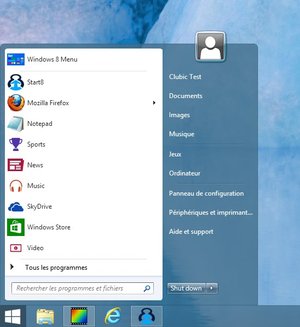
Retrouvez le menu Démarrer dans Windows 8 avec Classic Shell kb  Windows 8 Shell

Heureusement des solutions permettant de retrouver ce menu existent : Start8 et Classic Shell.

lire la suite…

Vous avez aimé cet article ? N'hésitez pas à le partager avec vos amis en cliquant sur les boutons ci-dessous :

  • Retrouvez le menu Démarrer dans Windows 8 avec Classic Shell kb  Windows 8 Shell
  • Retrouvez le menu Démarrer dans Windows 8 avec Classic Shell kb  Windows 8 Shell
  • Retrouvez le menu Démarrer dans Windows 8 avec Classic Shell kb  Windows 8 Shell
  • Retrouvez le menu Démarrer dans Windows 8 avec Classic Shell kb  Windows 8 Shell
  • Retrouvez le menu Démarrer dans Windows 8 avec Classic Shell kb  Windows 8 Shell
  • Retrouvez le menu Démarrer dans Windows 8 avec Classic Shell kb  Windows 8 Shell
  • Retrouvez le menu Démarrer dans Windows 8 avec Classic Shell kb  Windows 8 Shell
  • Retrouvez le menu Démarrer dans Windows 8 avec Classic Shell kb  Windows 8 Shell
  • Retrouvez le menu Démarrer dans Windows 8 avec Classic Shell kb  Windows 8 Shell
  • Retrouvez le menu Démarrer dans Windows 8 avec Classic Shell kb  Windows 8 Shell
  • Retrouvez le menu Démarrer dans Windows 8 avec Classic Shell kb  Windows 8 Shell

Comment éviter les problèmes d’accents avec Robocopy?

Tutoriels

18/12/2011

Tags: Astuce, Robocopy, Scripting, Shell

Lorsque le chemin vers un répertoire source ou destination de votre script robocopy contient un accent, il est possible, selon la configuration de votre système Windows, que vous obteniez une erreur. En effet DOS n’arrivera pas à interpréter cet accent et ne va donc pas trouver le chemin du répertoire spécifié …

lire la suite…

Vous avez aimé cet article ? N'hésitez pas à le partager avec vos amis en cliquant sur les boutons ci-dessous :

  • Comment éviter les problèmes daccents avec Robocopy? kb  Shell Scripting Robocopy Astuce
  • Comment éviter les problèmes daccents avec Robocopy? kb  Shell Scripting Robocopy Astuce
  • Comment éviter les problèmes daccents avec Robocopy? kb  Shell Scripting Robocopy Astuce
  • Comment éviter les problèmes daccents avec Robocopy? kb  Shell Scripting Robocopy Astuce
  • Comment éviter les problèmes daccents avec Robocopy? kb  Shell Scripting Robocopy Astuce
  • Comment éviter les problèmes daccents avec Robocopy? kb  Shell Scripting Robocopy Astuce
  • Comment éviter les problèmes daccents avec Robocopy? kb  Shell Scripting Robocopy Astuce
  • Comment éviter les problèmes daccents avec Robocopy? kb  Shell Scripting Robocopy Astuce
  • Comment éviter les problèmes daccents avec Robocopy? kb  Shell Scripting Robocopy Astuce
  • Comment éviter les problèmes daccents avec Robocopy? kb  Shell Scripting Robocopy Astuce
  • Comment éviter les problèmes daccents avec Robocopy? kb  Shell Scripting Robocopy Astuce

Créer une tâche planifiée sur un serveur distant

J’ai eu besoin récemment de créer 1 tâche planifiée sur 100 serveurs Windows. J’avais alors 2 solutions : Me connecter sur chaque serveur en terminal serveur et répéter 100 fois la même opération ou trouver une solution pour créer à distance la tâche planifiée sur les 100 serveurs à la fois. Une petite recherche et la solution était toute trouvée …

lire la suite…

Vous avez aimé cet article ? N'hésitez pas à le partager avec vos amis en cliquant sur les boutons ci-dessous :

  • Créer une tâche planifiée sur un serveur distant kb  Windows Server 2008 Windows Server 2003 Shell Planificateur
  • Créer une tâche planifiée sur un serveur distant kb  Windows Server 2008 Windows Server 2003 Shell Planificateur
  • Créer une tâche planifiée sur un serveur distant kb  Windows Server 2008 Windows Server 2003 Shell Planificateur
  • Créer une tâche planifiée sur un serveur distant kb  Windows Server 2008 Windows Server 2003 Shell Planificateur
  • Créer une tâche planifiée sur un serveur distant kb  Windows Server 2008 Windows Server 2003 Shell Planificateur
  • Créer une tâche planifiée sur un serveur distant kb  Windows Server 2008 Windows Server 2003 Shell Planificateur
  • Créer une tâche planifiée sur un serveur distant kb  Windows Server 2008 Windows Server 2003 Shell Planificateur
  • Créer une tâche planifiée sur un serveur distant kb  Windows Server 2008 Windows Server 2003 Shell Planificateur
  • Créer une tâche planifiée sur un serveur distant kb  Windows Server 2008 Windows Server 2003 Shell Planificateur
  • Créer une tâche planifiée sur un serveur distant kb  Windows Server 2008 Windows Server 2003 Shell Planificateur
  • Créer une tâche planifiée sur un serveur distant kb  Windows Server 2008 Windows Server 2003 Shell Planificateur

Comment lancer Powershell 2.0 sur Windows 7 et Windows Server 2008

Microsoft à intégré la version 2.0 de Powershell dans Windows Seven et Windows Server 2008. Pour lancer l’interpréteur rien de plus simple, il vous suffit de presser la touche WIN + R et de taper Powershell puis ENTER.

lire la suite…

Vous avez aimé cet article ? N'hésitez pas à le partager avec vos amis en cliquant sur les boutons ci-dessous :

  • Comment lancer Powershell 2.0 sur Windows 7 et Windows Server 2008 kb  Windows Workstation Windows Server Tutoriel Shell Scripting powershell
  • Comment lancer Powershell 2.0 sur Windows 7 et Windows Server 2008 kb  Windows Workstation Windows Server Tutoriel Shell Scripting powershell
  • Comment lancer Powershell 2.0 sur Windows 7 et Windows Server 2008 kb  Windows Workstation Windows Server Tutoriel Shell Scripting powershell
  • Comment lancer Powershell 2.0 sur Windows 7 et Windows Server 2008 kb  Windows Workstation Windows Server Tutoriel Shell Scripting powershell
  • Comment lancer Powershell 2.0 sur Windows 7 et Windows Server 2008 kb  Windows Workstation Windows Server Tutoriel Shell Scripting powershell
  • Comment lancer Powershell 2.0 sur Windows 7 et Windows Server 2008 kb  Windows Workstation Windows Server Tutoriel Shell Scripting powershell
  • Comment lancer Powershell 2.0 sur Windows 7 et Windows Server 2008 kb  Windows Workstation Windows Server Tutoriel Shell Scripting powershell
  • Comment lancer Powershell 2.0 sur Windows 7 et Windows Server 2008 kb  Windows Workstation Windows Server Tutoriel Shell Scripting powershell
  • Comment lancer Powershell 2.0 sur Windows 7 et Windows Server 2008 kb  Windows Workstation Windows Server Tutoriel Shell Scripting powershell
  • Comment lancer Powershell 2.0 sur Windows 7 et Windows Server 2008 kb  Windows Workstation Windows Server Tutoriel Shell Scripting powershell
  • Comment lancer Powershell 2.0 sur Windows 7 et Windows Server 2008 kb  Windows Workstation Windows Server Tutoriel Shell Scripting powershell

Comment retrouver le port TCP/UDP utilisé par une application

Les applications, les services ou les processus s’approprient parfois un port (ou un socket) afin de pouvoir établir un canal de communication avec un service tiers (Internet, Interface d’administation, Client, …).

Par exemple un serveur Web IIS se réserve par défaut le port 80 pour les écoutes HTTP. Les clients souhaitant accéder à ce serveur devront le faire sur le port 80. Si sur ce même serveur Web IIS vous souhaitez installer un serveur Web Apache, les 2 applications vont rentrer en conflit car Apache va également vouloir réserver le port 80 pour les écoutes HTTP ! Pas d’autres solutions dans ce cas que de modifier le port d’écoute d’Apache en lui attribuant par exemple le port 81. Les client pourront accéder au serveur Web Apache par l’adresse http://NomDuServeur:81

lire la suite…

Vous avez aimé cet article ? N'hésitez pas à le partager avec vos amis en cliquant sur les boutons ci-dessous :

  • Comment retrouver le port TCP/UDP utilisé par une application kb  Windows Server Shell netstat Monitoring Astuce
  • Comment retrouver le port TCP/UDP utilisé par une application kb  Windows Server Shell netstat Monitoring Astuce
  • Comment retrouver le port TCP/UDP utilisé par une application kb  Windows Server Shell netstat Monitoring Astuce
  • Comment retrouver le port TCP/UDP utilisé par une application kb  Windows Server Shell netstat Monitoring Astuce
  • Comment retrouver le port TCP/UDP utilisé par une application kb  Windows Server Shell netstat Monitoring Astuce
  • Comment retrouver le port TCP/UDP utilisé par une application kb  Windows Server Shell netstat Monitoring Astuce
  • Comment retrouver le port TCP/UDP utilisé par une application kb  Windows Server Shell netstat Monitoring Astuce
  • Comment retrouver le port TCP/UDP utilisé par une application kb  Windows Server Shell netstat Monitoring Astuce
  • Comment retrouver le port TCP/UDP utilisé par une application kb  Windows Server Shell netstat Monitoring Astuce
  • Comment retrouver le port TCP/UDP utilisé par une application kb  Windows Server Shell netstat Monitoring Astuce
  • Comment retrouver le port TCP/UDP utilisé par une application kb  Windows Server Shell netstat Monitoring Astuce

AceBackup

Vous avez aimé cet article ? N'hésitez pas à le partager avec vos amis en cliquant sur les boutons ci-dessous :

  • AceBackup softs  Shell schedule Sauvegarde programmer Outil ftp
  • AceBackup softs  Shell schedule Sauvegarde programmer Outil ftp
  • AceBackup softs  Shell schedule Sauvegarde programmer Outil ftp
  • AceBackup softs  Shell schedule Sauvegarde programmer Outil ftp
  • AceBackup softs  Shell schedule Sauvegarde programmer Outil ftp
  • AceBackup softs  Shell schedule Sauvegarde programmer Outil ftp
  • AceBackup softs  Shell schedule Sauvegarde programmer Outil ftp
  • AceBackup softs  Shell schedule Sauvegarde programmer Outil ftp
  • AceBackup softs  Shell schedule Sauvegarde programmer Outil ftp
  • AceBackup softs  Shell schedule Sauvegarde programmer Outil ftp
  • AceBackup softs  Shell schedule Sauvegarde programmer Outil ftp

Windows PowerShell

Logiciels

07/05/2008

Tags: Shell

Vous avez aimé cet article ? N'hésitez pas à le partager avec vos amis en cliquant sur les boutons ci-dessous :

  • Windows PowerShell softs  Shell
  • Windows PowerShell softs  Shell
  • Windows PowerShell softs  Shell
  • Windows PowerShell softs  Shell
  • Windows PowerShell softs  Shell
  • Windows PowerShell softs  Shell
  • Windows PowerShell softs  Shell
  • Windows PowerShell softs  Shell
  • Windows PowerShell softs  Shell
  • Windows PowerShell softs  Shell
  • Windows PowerShell softs  Shell